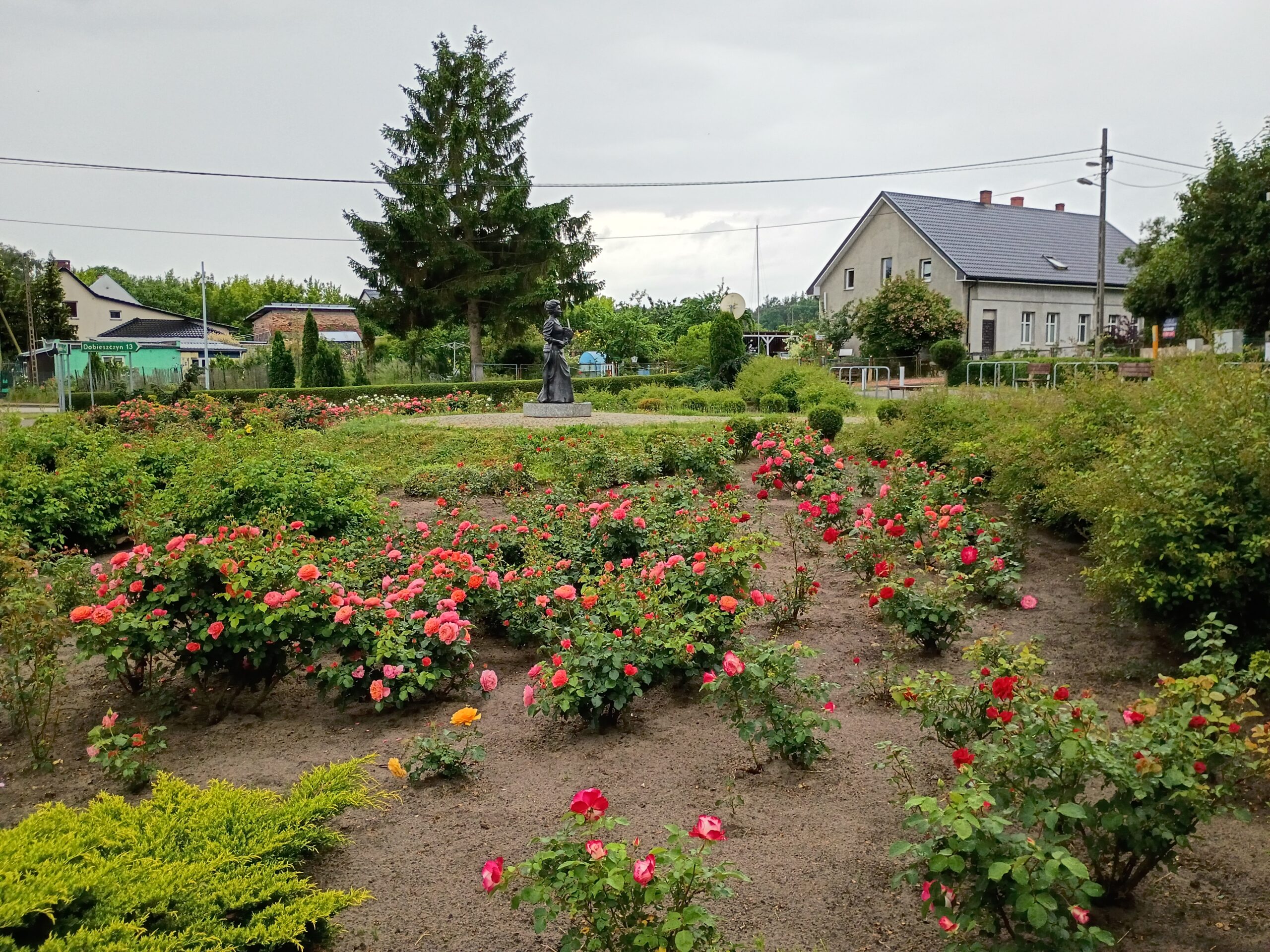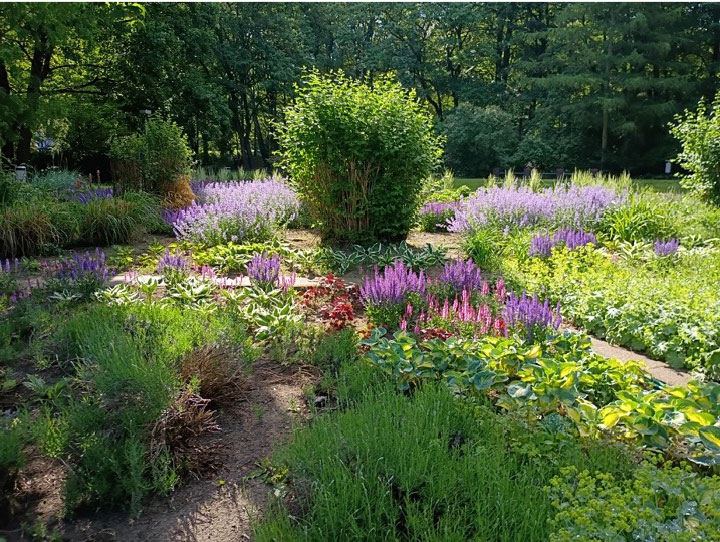
When I finally had space for a garden, I started by planting roses. It might have been, as Elizabeth von Arnim’s cousin Katherine Mansfield wrote, that “roses are the only flowers that impress people at garden-parties; [they are] the only flowers that everybody is certain of knowing.” Over time, my wife added some roses that Elizabeth had in her garden, and it added to a secret pride of living in Charlottesville, Virginia where Elizabeth spent time during both world wars. We were able to visit the house where she stayed while writing Christine, and we always slow down when passing the house where she stayed in 1940. Getting to visit Nassenheide seemed part of a larger dream, a place to visit on a distant day. When the University of Szczecin sponsored a conference dedicated to Elizabeth, it was that opportunity. We started in Szczecin with a visit to the Różanka Garden; although that was established in 1928, it is in a part of Szczecin that Elizabeth likely knew.
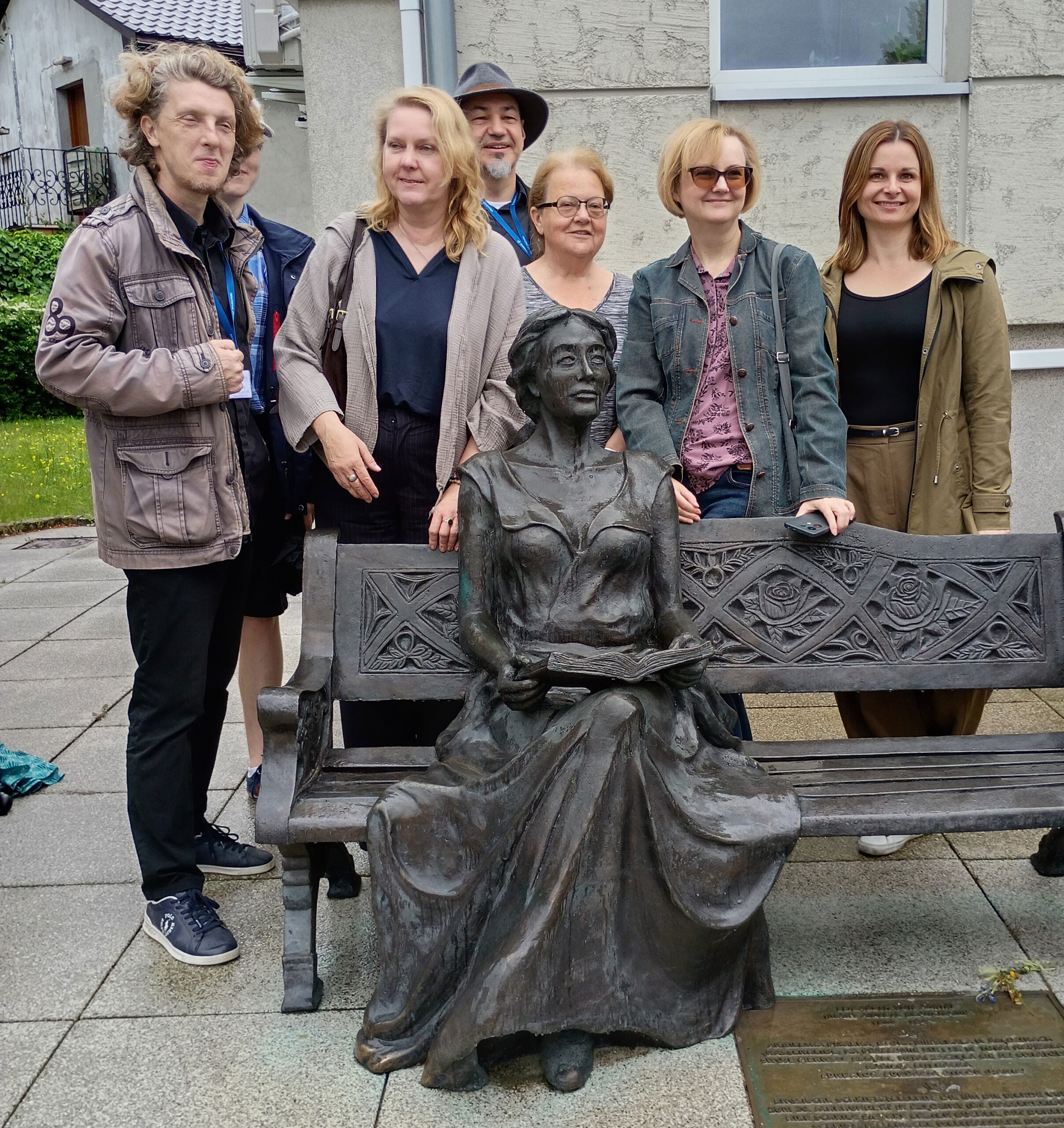
The conference organizers, in addition to a full program of talks in both Polish and English, organized an excursion to Rzedziny. While we were advised to temper our excitement, getting to visit Elizabeth’s Nassenheide was both exhilarating and meditative; the only physical buildings left on the site are outbuildings that give a sense of how large Nassenheide was in Elizabeth’s time. Bartosz Wójcik, who led the excursion, brought the group to the spot where the house once stood and invited us in: “Welcome to Elizabeth’s garden.” The site today recalls when Elizabeth wrote, “This is less a garden than a wilderness.” There was one wild rose, rosa canina, in bloom. Although it was not one of Elizabeth’s roses, it only added to the significance of the moment in this literary pilgrimage. There is a unique bond to Elizabeth’s garden and her writing when walking in her footsteps.
As we headed toward the recently renamed Elizabeth von Arnim school, I picked up a small rock and put it in my pocket. When we returned home, I put it in the garden room we call our secret garden. Over the years I’ve put other small rocks I’ve brought back including pieces of Homer’s Ithaca, Mansfield’s New Zealand, Wordsworth’s Cumbria, Dante’s Italy, and Thoreau’s Walden. Those rocks eventually mix into the garden, and our garden now includes a small piece of Elizabeth’s Pomerania mingled in the Virginia ground.