
Thank you so much for the kind invitation to speak today at the launch of this important new book. It is lovely to see everyone, I’m delighted to be here in New York via zoom, and even more delighted to see a new book on Elizabeth von Arnim featuring a range of familiar, and fresh, voices writing on a variety of topics, edited by the excellent Jennifer Shepherd and Noreen O’Connor – the detail of which I’ll introduce a little later.
For now, I’m sure we can all agree it is wonderful to see another publication from Edinburgh University Press, who have been increasingly supportive in helping raise the profile of Elizabeth von Arnim in recent years.
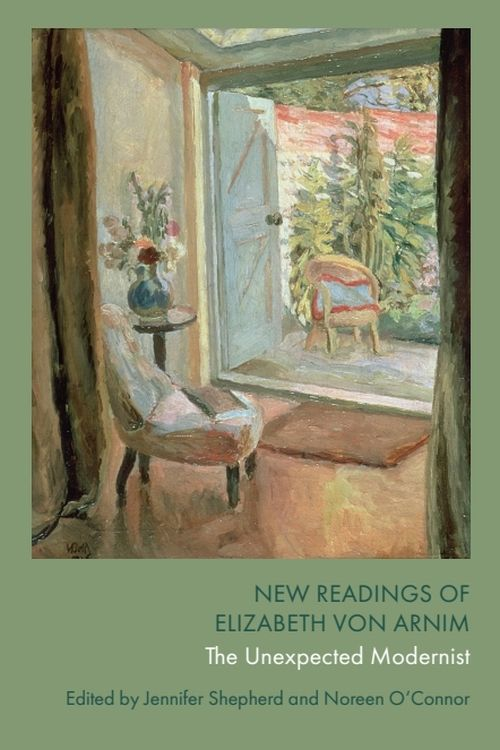
The new book, New Readings of Elizabeth von Arnim: The Unexpected Modernist is terrific, and is sure to develop our understanding of the complexity of von Arnim’s work.
It’s fair to say, I wrote the majority of this talk before reading the introduction to the new book, and I’m thankful to find points of cross over and comparison (as well as some divergences) between the editors and my own thinking. So, please take this talk, at least in part, as a broad introdZuction to the new book’s introduction, as it were.
As many of you will know, ‘little e’ was the name given to Elizabeth von Arnim (because she was petite) by the writer H.G. Wells during his relationship with her, and recently I was asked by a friend to join an international book group to talk a little about this association. To be candid, I was initially reluctant to be involved, not least because international Zoom calls (as the EvA steering group can attest) tend to begin at ungodly hours for someone, and, however much I enjoy spreading the word about von Arnim, there are limits to the enthusiasm I can muster before 7 am.
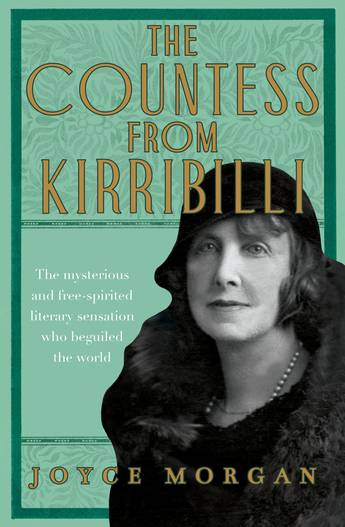
Also, talking about her relationship with H.G. Wells is, at best, tricky, and I certainly don’t intend to spend time here today raking over the coals. Instead, I point you to Joyce Morgan’s first-rate biography, The Countess from Kirribilli: The Mysterious and Free-Spirited Literary Sensation who Beguiled the World (Allen & Unwin, 2021), with its intelligent and even-handed treatment of those things we know about von Arnim and H.G. Wells and, more importantly, those things we don’t. (There has been much speculation and plenty of inaccuracy across the years.)
Anyway, I decided to join the international reading group mainly because the book to be discussed was Question 7 (Chatto & Windus, 2023-4) by Booker-prize winning author, Richard Flanagan. It is a fascinating book and the worthy winner of the 2024 Baillie Gifford Prize for Non-Fiction. How marvellous, I thought, that ‘little e’ has become big enough to feature in a mainstream, prize-winning publication, written by a wonderful author considered by the Washington Post as ‘one of our greatest living novelists.’ Good to see Elizabeth von Arnim in her rightful place, I thought, acknowledged by the literary intelligentsia, mixing with important thinkers, as in her own day.
So, I set to work, as academics do, looking for a bibliography to find welcome endnotes, where Flanagan is admirably clear that his rendering of the relationship between H.G. Wells and the writer, Rebecca West (who is given significant air time), is based on ‘known facts’ (p. 277). Good, I thought, before reading that West and Wells’s ‘conversations and thoughts are,’ Flanagan writes, ‘my own invention’ (p. 277). He continues, ‘I have sometimes used words of theirs, sometimes made them up and occasionally combined both’ (p. 277). OK, I thought, after all, this is not an academic book like the meticulously researched collection of essays we’re launching today. Question 7 is a self-reflexive, meta-autobiography and, at its heart, is the idea of epistemological doubt as Flanagan unearths, early, the fallibility of all forms of ‘knowing’. On this basis, it seemed safe to assume the method Flanagan takes towards the relationship between Wells and West is the same as that for his creation of the relationship between H.G. Wells and Elizabeth von Arnim.
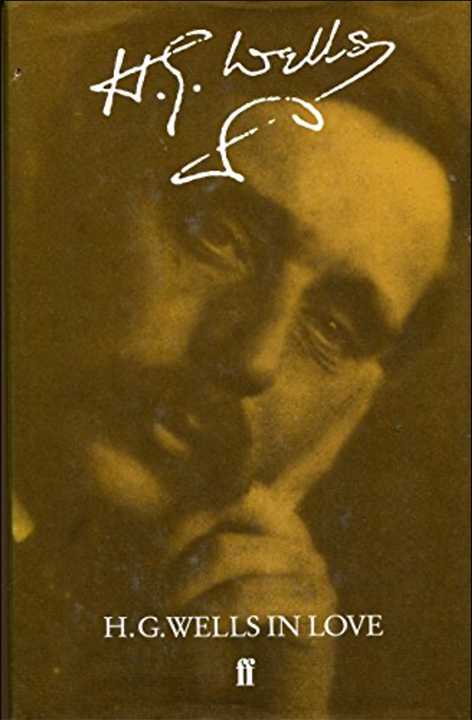
In fact, the main source cited for the section including von Arnim appears to be taken from HG Wells in Love: Postscript to an Experiment in Autobiography (Faber, 1984) which is, Flanagan writes, ‘a fascinating memoir of Wells’ sexual life at once transparent and opaque, unreliable and truthful’ (p. 278). By now, my heart is sinking.
I loved Flanagan’s book, however. It deserves the very many plaudits it has attracted for its ingenuity and complex layered narrative, but I was surprised to find I was capable of a great deal of agitation, even at the earliest hours, when it came to discussing ‘little e’ and Wells with the international book group. Yes, the setting in Question 7 is predominantly von Arnim’s ‘magnificent’ (p. 77) 16-bedroomed Chalet Soleil close to Crans Montana, Switzerland, which we know was built with the proceeds of her writing (no mean feat, and no hint of this fact in Flanagan’s book). Yes, there are the beautiful pine forests: yes, there is ‘chill alpine air’ (p. 78); yes, there is speculation about the supposed rivalry between von Arnim and Rebecca West for the simultaneous affections of Wells, but I was left, shall we say cold (if not pretty much frozen) at the lowest point when we’re told ‘little e’ emerged ‘naked’ as a ‘spectral vision’ ‘unannounced out of… [Wells’s] wardrobe like a music hall magician’s risqué assistant’ (p. 85).
The discussion of Question 7 by the book group was lively, intelligent and a genuine pleasure. The section including von Arnim in Flanagan’s book is one of many vignettes that add to the whole, rather than being in any way an important and continuing strand in the unfolding plot. Wells’ book The World Set Free (MacMillan, 1914) was indeed partly written at the Chalet Soleil, with sections, in reality, proofed by Elizabeth von Arnim. However, Wells’s book is presented as a significant catalyst for reflection in which von Arnim plays no real part.
This episode in Flanagan’s book is largely amusing, and not entirely flattering of Wells (von Arnim would probably have loved the tone): it is also effective in holding the interest of his implied reader; it is borderline salacious, and has elements of a psychological, as well as physical, sideshow. Wells is firmly at the centre of this Swiss sojourn; the famous photograph of von Arnim and Wells at von Arnim’s Chalet Soleil (we believe around 1913) is mentioned, but Wells’s constructed thoughts control the narrative, and these are presented smoothly and with humour. The book group, probably like so many readers, had read through the episode about the relationship without questions, except for my friend, who has heard enough about Elizabeth von Arnim to know this was unlikely to be the whole story.
This international book group talked at some length about ‘little e’, whose long career as a writer, and literary fame as a sometime best-selling author, was further diminished and sidelined in Question 7. When the book group became aware of the extent and sheer variety of von Arnim’s work, of her fascinating life, of her fame, and of her literary reputation at the time of publication and more recently, the group decided ‘little e’ had been made smaller than ever in this book of 2024.
It seemed Elizabeth von Arnim had been reduced yet again to her biography, this time as a second-tier handmaid of a well-known male author: as Wells’s ‘talented’ and ‘interesting’ (p. 84), but primarily ‘glamorous’ (p. 80) ‘mistress’ (p. 84). Additionally, the trajectory of von Arnim’s multifaceted life had been mediated through unreliable sources, the complexity of the whole masked by the surface application of narrative certainty and forthright rhetoric. As for von Arnim’s writing, I struggled to find anything except an early, and brief, mention of her as the famous author, and ‘wife of a German aristocrat’, writing of ‘her travails on her Pomeranian estate…seeking to become part of the Junker aristocracy’ (p.22). There is nothing in the short end notes.
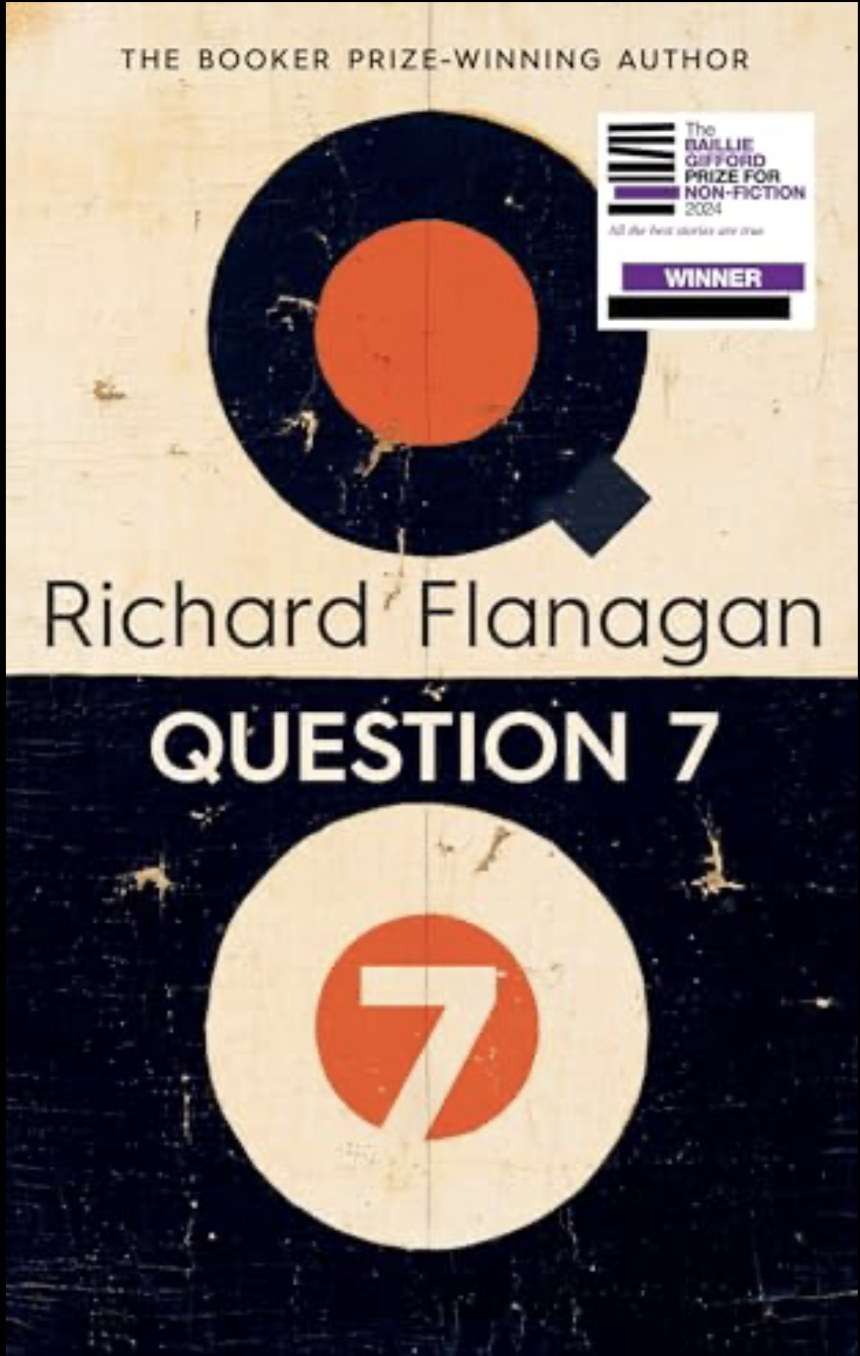
Of course, for consistency of narrative line, Flanagan would not want to skew the wider perspective of his book to include a more nuanced portrayal of Elizabeth von Arnim; his book, in its totality, skilfully blends fact and fiction, ideas of substance and non-substance, those of exterior and interior to undeniable effect. Neither was it Flanagan’s intention to write a scholarly account of ‘little e’. But in light of this recent portrayal, I feel compelled to say, unequivocally, that this project remains our job and, though many of us have been working to this end individually, collectively and trans-nationally for a great deal of time, there is clearly still plenty of work to be done.
Von Arnim may have signed her correspondence to Wells as ‘little e’ (a pet name she must have approved), and she chose words relating to her size for the gently self-deprecating epigraph of her own gravestone — Parva sed apta, roughly translated as ‘small but suitable’ — but those working on von Arnim’s writing have increasingly come to understand just how big she really is.
In place of reading her novels purely in relation to her intriguing biography (always difficult to disentangle these strands), and thinking about her acquaintance with well-known literary figures as we set out to re-contextualise her, scholars have also tried to reclaim her in the last decade or so, by reading von Arnim’s work on its own terms. Much of this latest Edinburgh University Press title is, for example, admirable in this respect.
(I’m going to use ‘we’ from hereon because, it seems to me we are all in this project together, both as interested readers and struggling academics).
It is also fair to say, I think, that, over the years, scholars have grappled with the problem of literary classification, attempting to read von Arnim in tandem with other authors (Elizabeth Bowen, Katherine Mansfield, Jane Austen, Charlotte Bronte and so on), as we’ve wondered if we can ‘fit’ von Arnim into existing groupings to help raise her profile. The contemporaneous reviews of von Arnim’s work make clear just how risky a task this is, largely because of the generic complication of von Armin’s hybrid work, its intertextual depth, its focus on readership and its comic peculiarity, and this is without accounting for the development of her approach and style across decades.

Von Arnim’s writing defies easy classification and, as O’Connor and Shepherd argue in the introduction to this new book, ‘The conversations about’ von Arnim’s ‘designation are a reminder that the way critics classify literary works has an effect not only on how we read books but also whether we read them at all’ (EUP, p. 26). Additionally, von Arnim frequently includes an irreverent knowledge of past writers and literary traditions in her work, poking fun (most notably in The Enchanted April) at the range of distinctions between low, middle and highbrow that reflect a hierarchy of classification used by critics to categorise writing in the early 20th century and beyond. She is enormously ambivalent when it comes to the notion of fixed approaches, preferring, she writes, the ‘tonic properties’ of a carefully-applied and ‘astringent pen’ (Oxford World’s Classics, The Enchanted April, 2022, p. xv). ‘So much better not to write like anyone but oneself’ (Elizabeth von Arnim: Beyond the German Garden p.148), she concludes.
To reiterate, we’ve clearly been involved in a risky business when we’ve tried to categorize von Arnim’s work. Nevertheless, we’ve been undaunted as we’ve begun to understand the size of the task we’ve taken on, and perhaps we’ve also under-estimated how much we’ve needed to be creative, and alert to the shifting fashions of academic publishers, as we’ve reinserted von Arnim into the milieu of her day, firstly by carving out a niche for her work, creating a platform to speak from through literary association, capitalising on welcome reprints and generally being almost as nimble as von Arnim was in designing her own career path.
As a consequence, we’ve considered von Arnim as a middlebrow writer, catching a wave of interest created by a seminal study and by academic publishers. We’ve thought about her allegiances with Broadbrow literary production and, at a more granular level, her early work as anti-invasion literature and the imperial adventure story; as a kind of ‘ecological writing’; as ‘female escape narratives’, ‘as travel writing’; ‘as domestic novels sometimes shaded by Gothic leanings’; as fairytales’; ‘as serialised fiction’; and as an author interested in the complexity of gender politics, something we’ve rightly become hesitant to call uncomplicated ‘feminism’, even as we acknowledge her exploration of women’s lives throughout her work. We are pretty much agreed that it is the most continuing preoccupation throughout her ouvre. And now, in 2025, we have a fine and welcome new critical edition where von Arnim’s ‘modernist’ tendencies are expertly uncovered.
Arguably, in our attempts to make Elizabeth von Arnim relevant again to a fresh generation of readers, to reveal the seriousness of her writing alongside her wit and humour, we have repeatedly raised questions about whether she corresponds to any one artistic category. It seems to me, as a community of scholars, as we have ranged across the variety of work she produced between 1898 and 1940 and, as we have systematically contextualised it historically, occasionally nationally, intellectually and socially, we have discovered her writing is simply too big, or at least exceeds any one label we have chosen to apply at a particular moment, and this is before we add in geography, a pathway for fresh research suggested by the title we’re launching today. Elizabeth von Arnim, we have found, is ‘Not’ in fact such a ‘little e’.
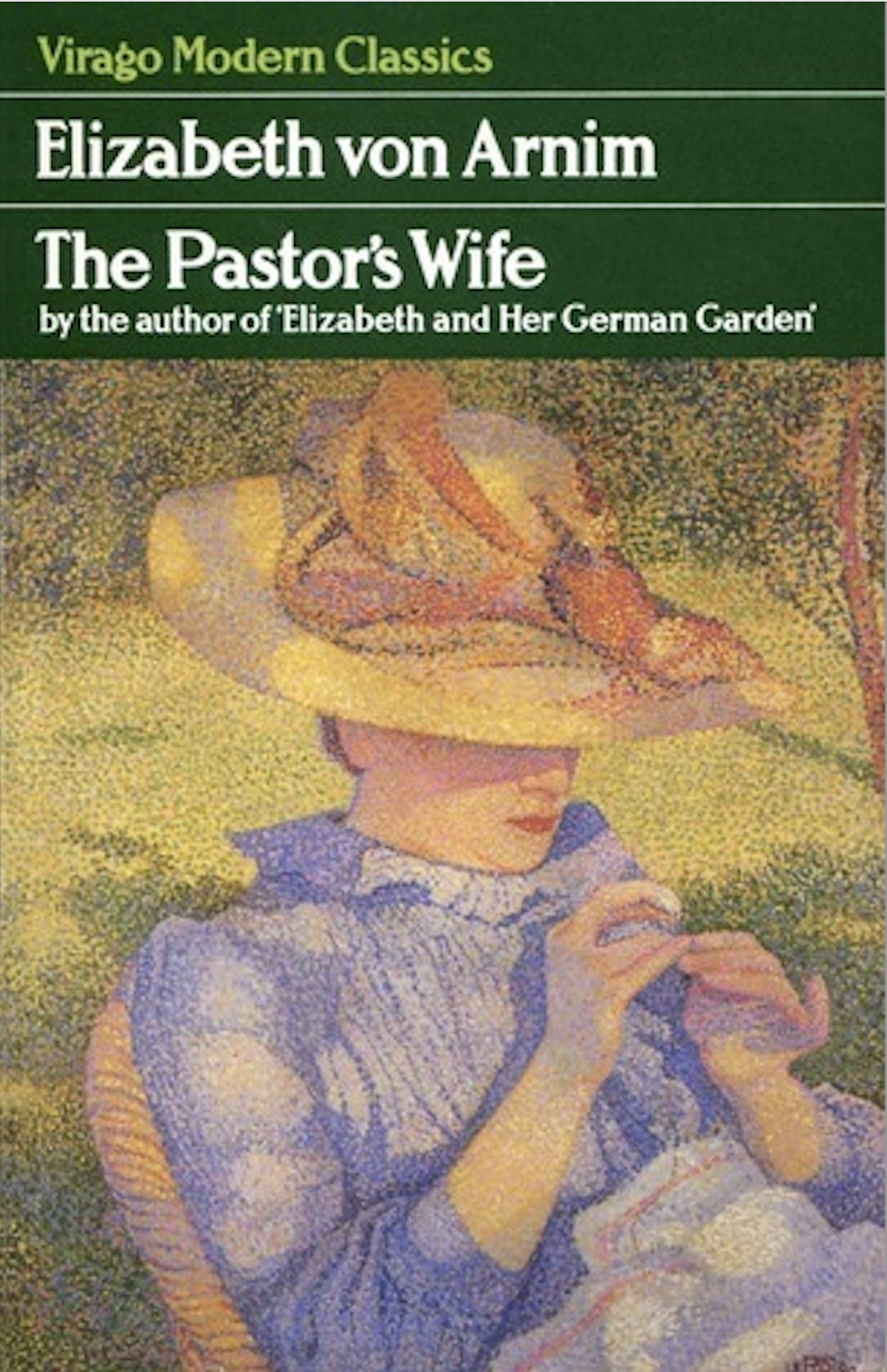
Today bears out this idea. Thought of for so long, mainly in the popular imagination, as a rural writer, preoccupied with gardens and the natural world, von Arnim has been rightly transplanted for this ‘Day on the Town with Elizabeth’. When I saw the title, for instance, I immediately thought of the opening of The Pastor’s Wife (1914) where the character, Ingeborg, escapes the drudgery of life as the Bishop’s assistant, heading to a London dentist with tooth ache, to find herself literally tingling with excitement brought about by time spent alone wandering the buzzing streets and lively restaurants, as the city opens up the potentiality of other spaces. Or Millie’s journey of self-awareness in the novel, Expiation (1929), where London’s Bloomsbury provides escape from stifling suburbia, mainly as a positive feeling of nostalgia before becoming a present, rather disappointing, reality.
In early conceptions of modernism, the city features largely as a well-known trope; the site of noise, speed, innovation, de-individuation, the blasé attitude and complicated progress. We may not initially think of von Arnim’s writing as directly engaging with these ideas, or with the variety of modernist manifestos that emerged in the UK during the early years of the twentieth century, but as O’Connor and Shepherd argue in the introduction to this new book, von Arnim is ‘a writer who uses her fiction to engage with women’s experience of modernity in real time’ (p. 12).
I seem to have caught the bug when reading this new title and, as the authors hoped for their readers, am thinking about, and looking for, affiliations and episodes with features we have come to regard as modernist.
From von Arnim’s correspondence, journals and writing, we can already be sure she was familiar with the broad conceptual thought that accompanied modernism as it emerged in the 20th century. She also witnessed the progress of experimental modernism as an international art movement and recognised its increasing ability to displace, critically, writing like her own. Her literary instincts were keen too. She bracketed together early, for example, Mansfield and Woolf, and considered a day reading ‘Virginia and Katherine’ as ‘one shot through with radiance’ (quoted in Beyond the German Garden, p. 145).
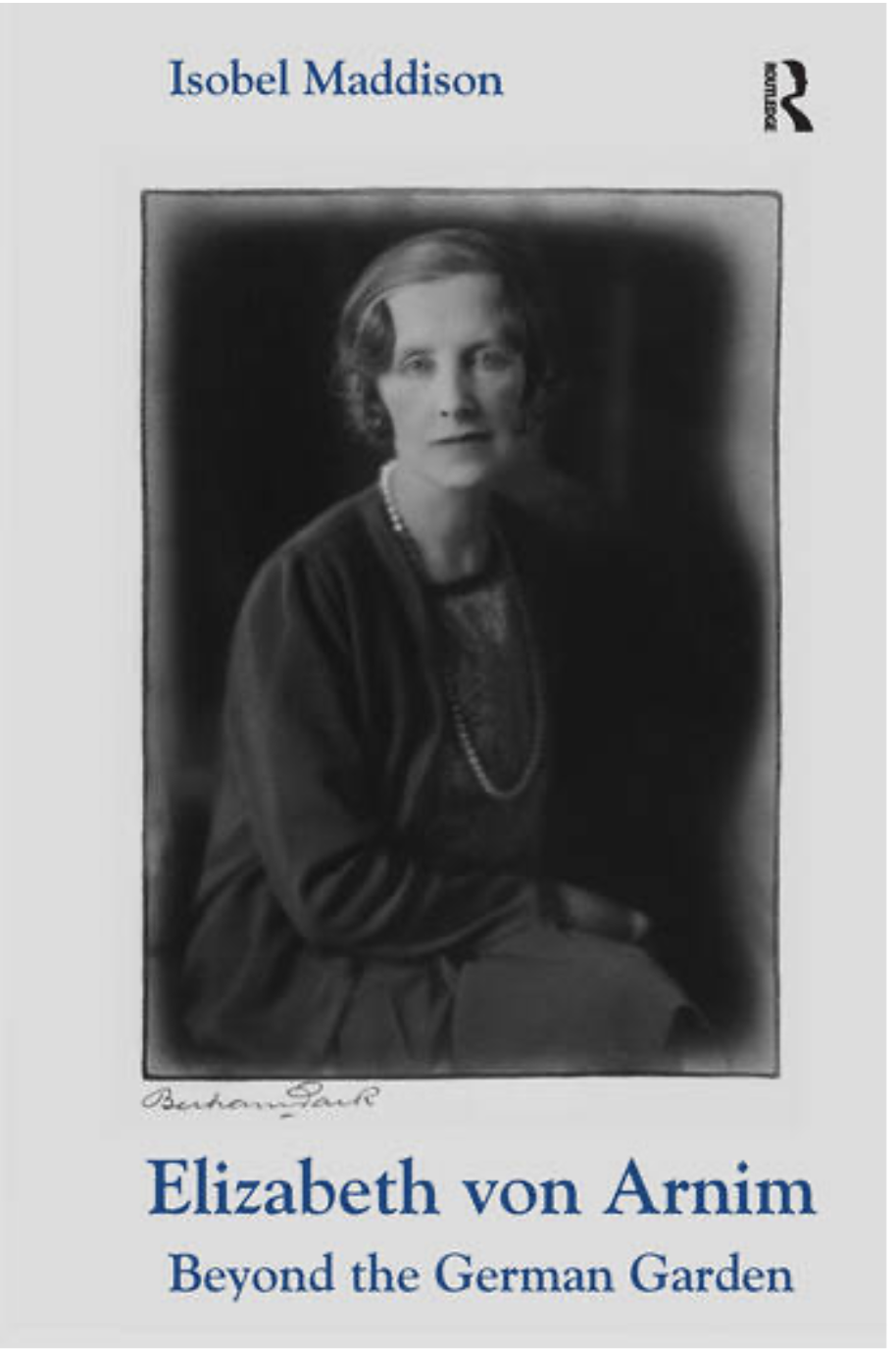
Her letters also demonstrate a comparative, and active, knowledge of the work of Joyce, Proust, E.M. Forster, D.H. Lawrence and Rebecca West, among others. And, crucially, from von Arnim’s use of intertextual allusions alone, we know she was able to ‘situate’ these modern approaches in a long continuum where variant forms may have refracted recurring ideas into differing shades of meaning without necessarily altering the fundamental premise of the discussion, or varying the underlying questions raised by the content of the writing.
This new Edinburgh University Press title is alert to these matters while also including a discussion of formal qualities as part of the project to position von Arnim’s writing as unexpectedly modernist, and the attention to the use of focalised narrative and free indirect discourse in some of the chapters is especially illuminating, though this is not presented as the only measure of a modern outlook.
There are also other stylistic techniques found in von Arnim’s later work that are similarly revealing, and one of these is her handling of time. I am obviously cherry-picking here, but in The Enchanted April (published in 1922, an enormously significant year for British literary modernism, when Joyce’s Ulysses, TS Eliot’s The Waste Land, and Virginia Woolf’s Jacob’s Room appeared), von Arnim experiments with narrative time, and not for the first occasion.
As I have written elsewhere, the visit to the Italian Castle, San Salvatore, by four unhappy women seeking refuge, works primarily as a suspension point, outside of our idea of ‘normal’ time. In this novel, the narrative is focussed much more on the intricacies of psychological time with its non-linear progress, reliance on individual memory and internal reflection. For example, when the central protagonist, Lotty, finally arrives at the castle, she realises she ‘had no idea what time it was [because] she had forgotten to wind up her watch ever since, centuries ago’ (von Arnim explicitly highlighting internal time here), ‘she last went to bed in Hampstead ‘(OWC, 2022, p. 43) (a knowing nod to external time). In this sense von Arnim’s The Enchanted April is more akin to Woolf’s use of time in her writing, though different in technique, von Arnim skilfully creating a long, internal narrative moment hovering empty before an unclear future.
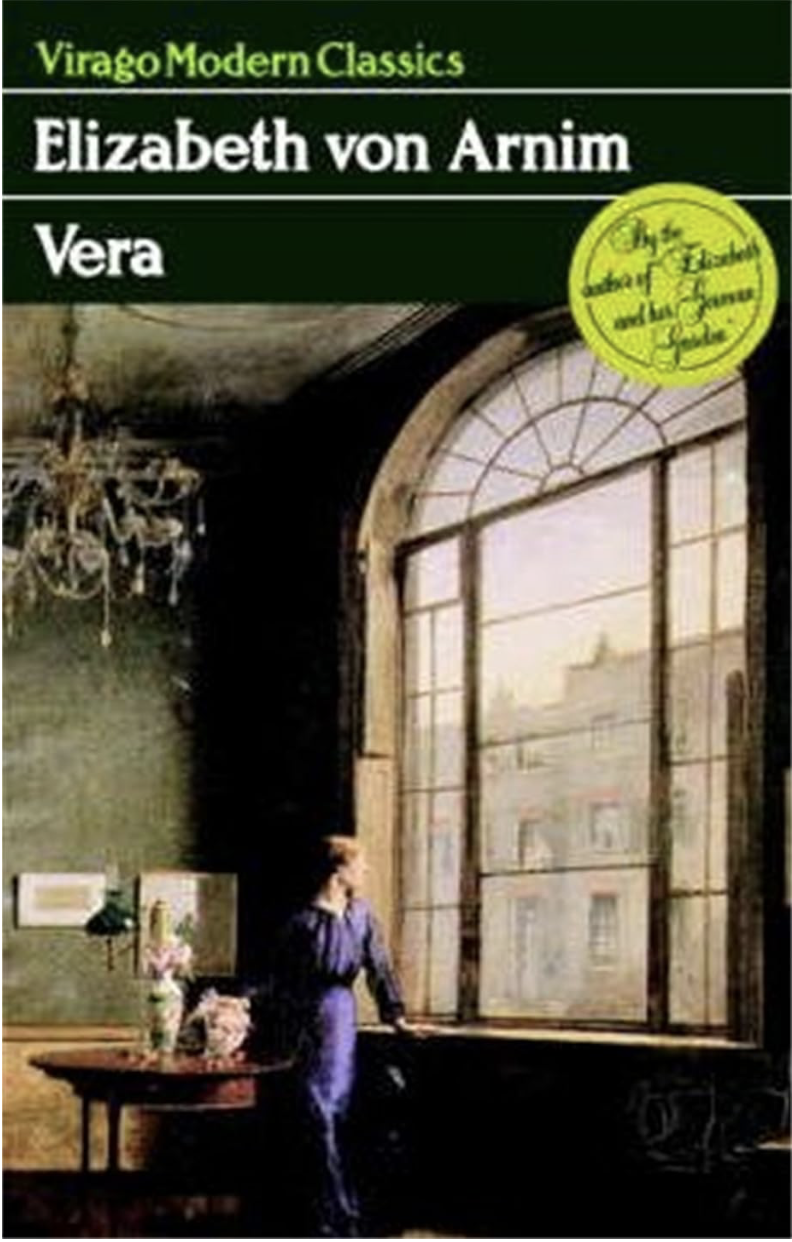
And in the more serious parts of Vera, published in 1921 a year before The Enchanted April appeared (as I argued in Beyond the German Garden), von Arnim chooses a condensed temporal frame for specific episodes that have more in common with a ‘modernist’ short story than a comedic novel, as she intensifies the action in the new marital home by concentrating on ‘the dark places of psychology,’ again, to quote Virginia Woolf. The effect is that, within what feels like an extremely long three-day period, von Arnim’s central protagonist, Lucy, becomes identifiable with earlier literary heroines who are systematically victimised. At the same time, familiar gothic tropes are modified, bringing T.S. Eliot’s ‘historical sense’ into a working reality, extending Vera beyond surface meanings into an intertextual and resuscitated past.
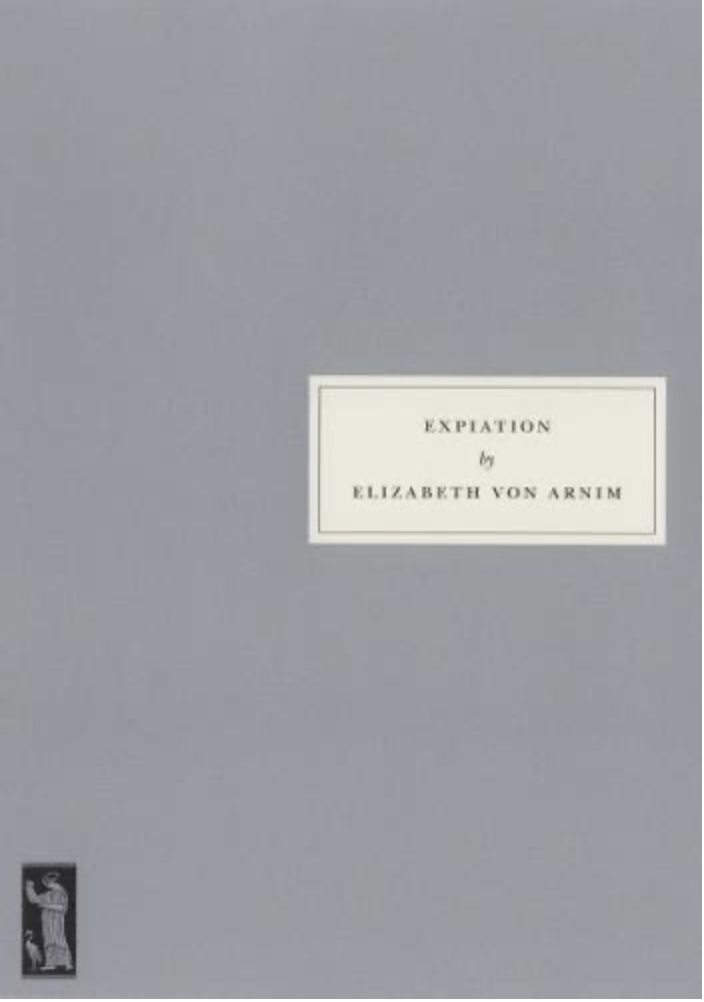
Similarly in Expiation (1929), a novel we know von Arnim was writing as she read Woolf’s To the Lighthouse (1927)), we find broadly comparable topics in both books, but communicated through differing techniques and tones.
As we know, To the Lighthouse is, in part, a retrospective account of family life before the Great War, and the first part of the book offers an archetypal 19th-century marriage marked by deep affection and personal tension, communicated largely through indeterminate, sensory diction that represents non-linear interiority by mimicking it. Essentially, the narrative style is mimetic. Von Arnim’s Expiation differs, being largely satiric, marked chiefly by the description of non-linear interiority rather than the mimicking of it, the narrative peppered with moments of free indirect speech, declarative statement and omniscient comment as social conventions are highlighted only to be systematically dismantled, as in Woolf’s novel (Beyond the German Garden, p. 146).
These are just starting points for uncovering in the future von Arnim’s possible affinities with modernism and its practitioners, which leads me neatly to this ambitious new EUP title where close textual analysis and the shifting definitions of modernism have been enlisted to such convincing effect.
It is right to say, I think, that Elizabeth von Arnim: The Unexpected Modernist is a landmark book, and the editors, authors and publishers are to be congratulated. The express aim is to significantly extend the parameters of scholarship on von Arnim, arguing for the establishment of Elizabeth von Arnim Studies, and, to this end, the book ranges widely.
Now, I’m mindful many of you will be far more familiar with the contents of the new book than I am, but for those who have yet to have the pleasure of reading it, I’ll offer a broad outline taken from the introduction:
Through a selection of established authors and fresh voices, the early chapters revisit some of the most familiar critical contexts for von Arnim’s work – first wave feminism, nationalism, embodied femininity and literary gender – but with fresh eyes, in a section titled ‘Returning to Elizabeth: Gender, Politics and Genre.’ It is extremely pleasing to see some of von Arnim’s less well-known novels given a scholarly airing as part of this endeavour, and there are some interesting and unexpected pairings too. Wonderful to find an analysis of previously unearthed manuscript material.

The second section of the book, ‘Re-imagining Elizabeth: New Critical Directions,’ offers original readings: on fashion, children’s literature, musical composition, the philosophy of aesthetics and literary sociology, all of which offer innovative contexts that stretch our perspective on von Arnim’s achievements, and open new lines of enquiry for continuing scholarship of her work.
In section three, ‘Reading Elizabeth; Reading Others,’ several scholars explore von Arnim’s affinities with modernism and her contemporary modernist writers, creating new associations and widening the scope of von Arnim’s reach.
In their entirety, the chapters in this new book offer readers ‘the opportunity to get to know Elizabeth von Arnim and her work better, prompting a deep understanding of her relationship with genre, class, gender roles, national identity and aesthetics’ (EUP, p.12). Above all else, the editors tell us, the volume has been designed ‘to encourage new and returning readers to approach von Arnim’s work with an eye for its intellectual richness and its social engagement, as well as the pleasure it inevitably gives’ (EUP, p.12). Bravo. It is a success on all these fronts, and I urge those interested to buy a copy quickly, and read it.
Just to close, and in the interests of circularity and completeness, perhaps we might return to Wells, this time to briefly set the record straight, as far as we’re able. Whatever the close association between von Arnim and Wells, we know it was von Arnim who halted its more serious tendencies. And, we also know von Arnim’s work appeared alongside that of Wells in publishers’ lists as his equal. Taking the entire body of Elizabeth von Arnim studies to date as our guide, I believe we can also say indisputably, that Wells had rarely been more wrong when in 1934 he praised one of von Arnim’s novels, before suggesting ‘those who learn to write fiction in universities’ would dismiss her work as not ‘playing the game’ (Beyond the German Garden, p. 42) – one assumes of obvious seriousness and of innovation. And, as we can all agree, Wells was entirely wrong when he chose to argue that ‘little e’ was ‘incapable of philosophical thought or political ideas’ (Beyond the German Garden, p. 143). She was, in very many senses, big, possibly even huge. Thank you.
